

Did You Know Your Dream Gown Could Be Ruined Before Your Wedding Day?
Here’s a startling statistic that might make you pause: according to bridal industry research, nearly 23% of wedding dresses arrive at the ceremony with some form of damage—wrinkles, dust stains, or worse, yellowing from improper storage. Imagine spending months (and thousands of dollars) finding the perfect dress, only to discover it’s been compromised because of how it was stored or transported.
I’ve been styling brides for over a decade, and let me tell you, nothing breaks my heart more than seeing a gorgeous gown pulled from a flimsy plastic cover with permanent creases or mystery stains. That’s precisely why investing in a quality wedding dress garment bag isn’t just a nice-to-have—it’s absolutely essential for protecting your most treasured fashion investment.
Whether you’ve splurged on a designer masterpiece or found an affordable gem, your wedding gown deserves proper protection from the moment you say “yes” to the dress until you walk down that aisle. In this comprehensive guide, I’m sharing the 7 best ways to protect your gown, along with insider tips I’ve gathered from countless bridal consultations.
Wardrobe Essentials: Your Bridal Protection Kit
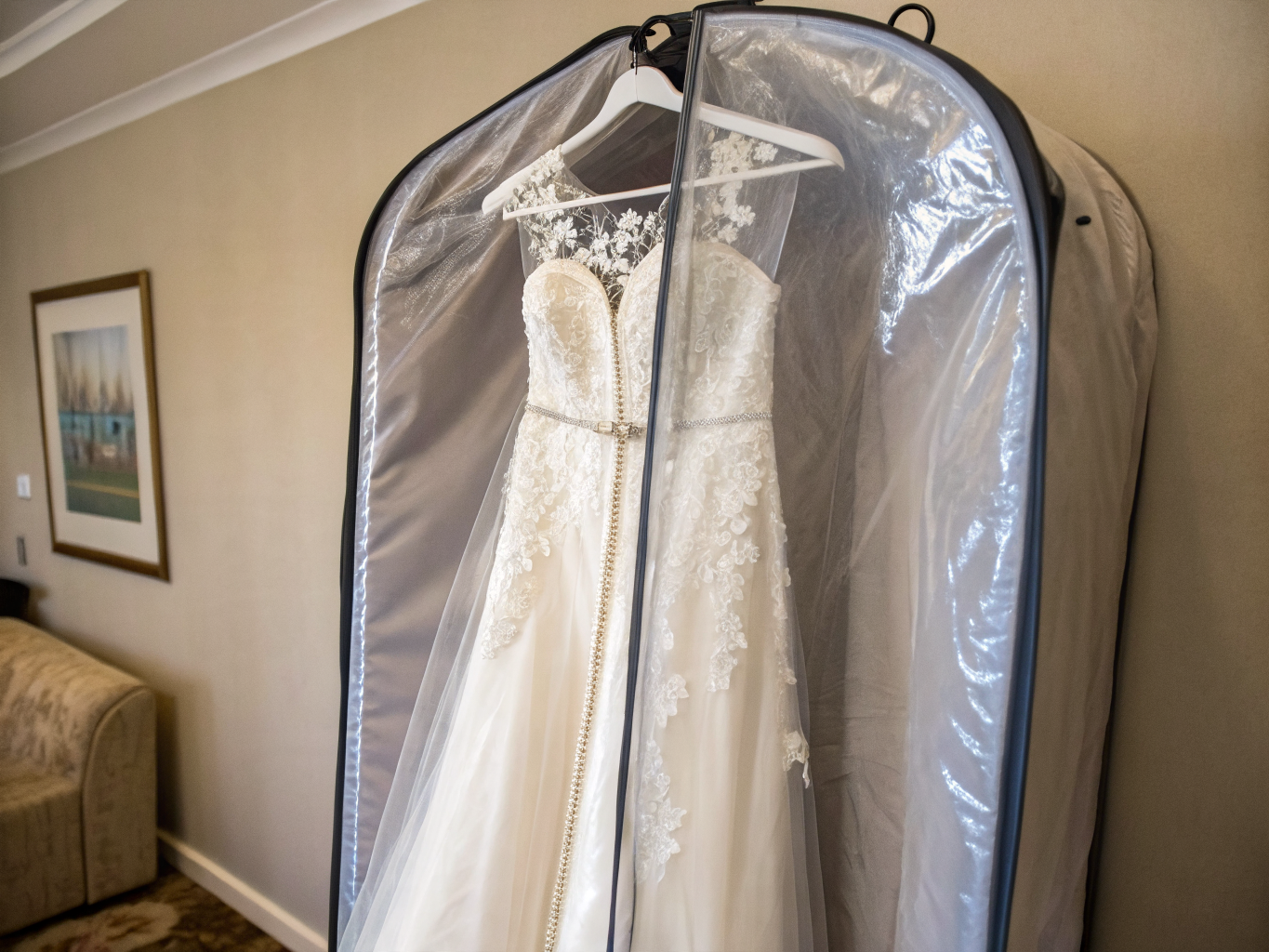
Before we dive into the protection strategies, let’s talk about assembling your bridal care kit. Think of this as the ultimate wardrobe essential list for your wedding dress journey.
The Must-Haves:
Breathable cotton or muslin garment bag – This is your MVP. Natural fabrics allow air circulation while keeping dust and light at bay. Swap a basic plastic cover for a quality cotton bag, and you’re already ahead of the game.
Acid-free tissue paper – For cushioning delicate details like beading, lace appliqués, and structured bodices. The soft, papery texture feels almost cloud-like against fabric.
Cedar blocks or lavender sachets – Natural moth deterrents that leave your gown smelling subtly fresh without harsh chemicals.
Padded hangers – Wide, cushioned hangers distribute weight evenly and prevent those dreaded shoulder bumps.
Steamer or professional steaming service contact – Because let’s be honest, wrinkles happen.
White cotton gloves – These might seem excessive, but natural oils from your hands can leave marks on delicate silk or satin.
Smart Substitutions:
If you’re working with a tighter budget, swap the premium muslin bag for a clean, white cotton sheet wrapped carefully around your dress. It’s not as elegant, but it does the job. Similarly, instead of expensive cedar blocks, dried lavender from your garden works beautifully—plus, it adds that romantic, old-world charm.
The sensory experience matters here. When you unzip that protective bag and see your pristine gown waiting for you, there’s an emotional rush that’s hard to describe. It’s anticipation, excitement, and relief all wrapped into one moment.
Styling Time: How Long Does Proper Gown Protection Take?
Here’s something brides rarely consider: properly caring for and storing your wedding dress actually saves you time and stress in the long run.
Let me break this down with real numbers:
- Initial preparation and proper hanging: 15-20 minutes
- Weekly check-ins (highly recommended): 5 minutes
- Final steaming and touch-up before the big day: 45-60 minutes
- Emergency damage control from improper storage: 3-4 hours (plus potential professional cleaning costs)
When I compare this to brides who casually toss their dress in a closet with a garbage bag cover? The difference is dramatic. One bride I worked with last spring spent an entire afternoon trying to remove yellow oxidation marks from her silk organza gown because she’d stored it in a non-breathable plastic bag for six months.
Speaking of unconventional approaches, I’ve actually seen some creative souls experiment with a garbage bag dress concept for art projects and avant-garde fashion statements—but trust me, plastic garbage bags are the absolute last thing you want anywhere near your actual wedding gown. The trapped moisture creates a breeding ground for mold and mildew.
Step-by-Step Styling Guide: The 7 Best Ways to Protect Your Gown
Step 1: Choose the Right Wedding Dress Garment Bag Material
Not all garment bags are created equal, and this decision matters more than you might think.
The golden rule: Always opt for breathable, natural materials. Cotton, muslin, or canvas bags allow air circulation that prevents moisture buildup and fabric deterioration.
Stylist trick: Look for bags with a gusseted bottom. This extra space accommodates fuller skirts without crushing them. If your ball gown has layers upon layers of tulle, you’ll thank me for this tip.
Avoid plastic at all costs—even those fancy-looking clear vinyl bags from bridal shops. They might let you admire your dress, but they trap humidity like nobody’s business.
Step 2: Master the Art of Proper Hanging
Here’s where many brides go wrong. Never, ever hang your wedding dress by those flimsy ribbon loops inside the bodice. They’re meant for store displays, not long-term storage.
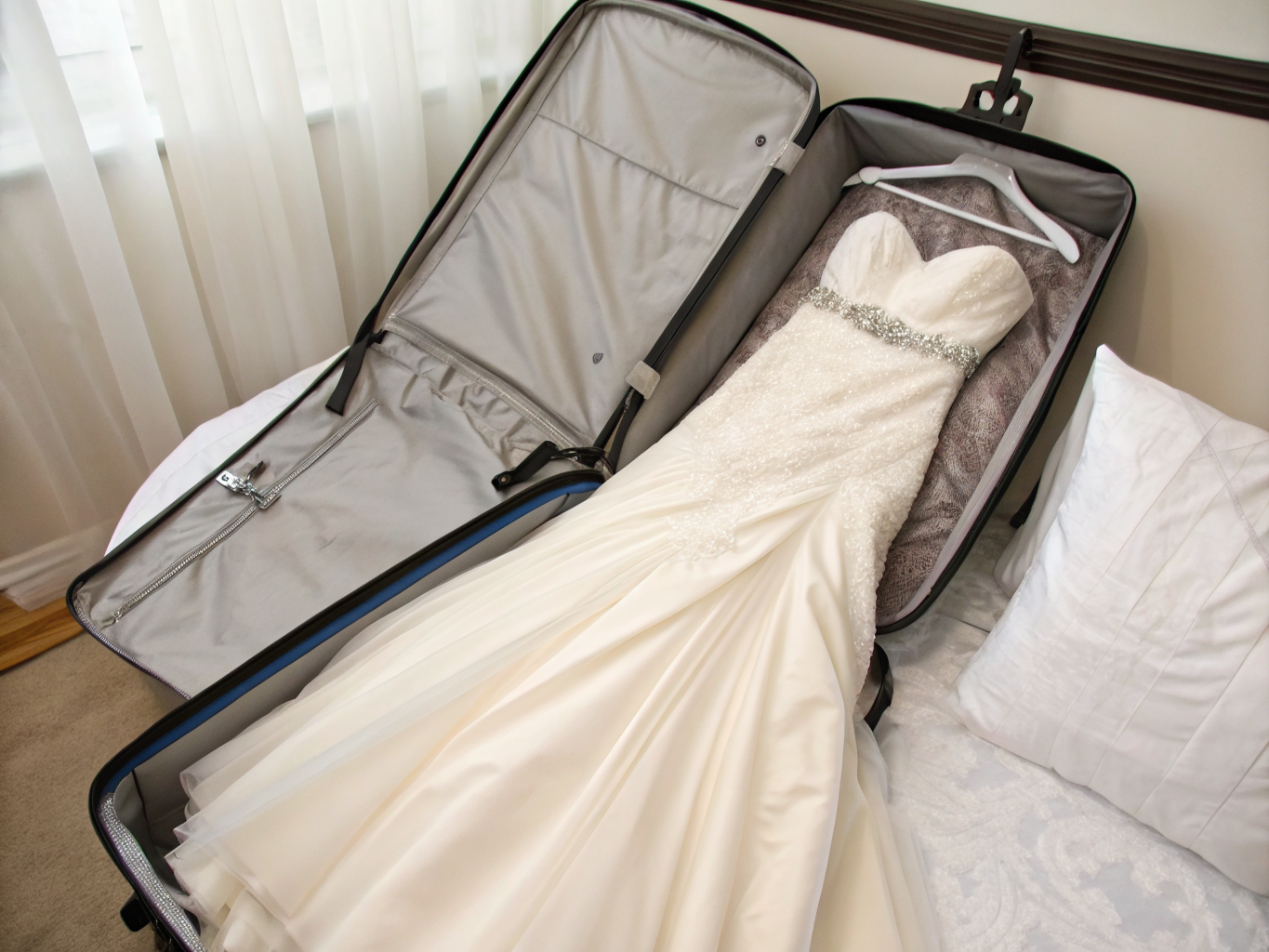
The proper method: Use the internal waist loops (if your dress has them) or invest in a padded hanger that supports the entire bodice area. For heavier gowns with extensive beading or long trains, consider folding the dress carefully inside the garment bag rather than hanging it.
Pro tip from my styling kit: Stuff the bodice lightly with acid-free tissue paper to maintain its shape. It’s like giving your dress a gentle, supportive hug.
Step 3: Create the Ideal Storage Environment
Temperature and humidity are your wedding dress’s silent enemies.
Ideal conditions:
- Temperature: 65-70°F (18-21°C)
- Humidity: 50-55%
- Light exposure: Minimal to none
Store your wedding dress garment bag in a cool, dark closet—not an attic, basement, or garage. Those spaces experience temperature fluctuations that accelerate fabric aging. I’ve seen antique lace literally crumble from years of improper attic storage.
If you’re storing your dress for months before the wedding, consider adding a small dehumidifier to your closet space, especially if you live in a humid climate.
Step 4: Protect Delicate Embellishments
Beading, sequins, lace appliqués, and crystal work require extra attention.
Layer acid-free tissue paper between any folded sections. For particularly delicate areas—think hand-sewn pearls or vintage lace—create small tissue paper cushions that prevent friction.
Stylist secret: I turn embellished sections inward when storing, so the decorative elements face soft fabric rather than potential snag points.
Step 5: Schedule Regular Check-Ins
This might sound obsessive, but hear me out. A quick monthly check on your stored gown can catch problems before they become disasters.
What to look for:
- Any discoloration or yellowing
- Musty odors (sign of mold growth)
- Pest activity
- Fabric stress or pulling
Opening your garment bag briefly also allows fresh air circulation—think of it as letting your dress breathe.
Step 6: Plan Your Transportation Strategy
The journey from storage to venue is often when damage occurs. A high-quality wedding dress garment bag should travel flat whenever possible.
If you’re flying with your dress (absolutely carry it on, never check it!), most airlines will hang it in a crew closet if you ask nicely. Call ahead to confirm their policy.
For car transport, lay the bag across the back seat or use a garment hook—never fold it into a trunk.
Step 7: Pre-Wedding Preparation
About a week before your wedding, remove your gown from storage and have it professionally steamed. Hanging it in your bathroom while running a hot shower can help release minor wrinkles, but nothing beats professional equipment for serious creasing.
Fashion Fit & Comfort Insights
Let’s talk fabrics, because understanding what your dress is made of directly impacts how you should protect it.
Silk (including silk mikado, duchess satin, charmeuse): Extremely delicate and susceptible to water spots. Store in complete darkness—silk degrades faster under UV exposure. Data shows silk can lose up to 15% of its tensile strength with prolonged light exposure.
Tulle and organza: Prone to crushing. These airy, ethereal fabrics need extra space in your garment bag. I recommend bags with at least 8 inches of extra width.
Lace: Whether Chantilly, Alençon, or guipure, lace catches on everything. Wrap it carefully and avoid velcro closures on your garment bag.
Crepe: More forgiving than silk but still requires breathable storage. The good news? Crepe releases wrinkles relatively easily with steam.
From personal experience, I wore a silk chiffon gown to a summer outdoor wedding years ago (as a guest), and the breathability made an enormous difference. Natural fabrics allow airflow—synthetic blends, while often more affordable, can feel suffocating and trap perspiration that leads to odor retention.
Sustainable & Affordable Alternatives
Wedding expenses add up quickly, and I completely understand wanting to save where possible without sacrificing quality.
Budget-Friendly Options:
DIY muslin bag: Purchase unbleached muslin fabric from a craft store (roughly $5-8 per yard) and sew a simple drawstring bag. It’s surprisingly easy, even for beginners.
Repurposed white cotton sheets: Clean, white, 100% cotton sheets can wrap around your dress effectively. Just ensure there’s no dye transfer risk.
Secondhand garment bags: Check Facebook Marketplace or local bridal groups. Many brides sell their barely-used garment bags after their wedding.
Eco-Conscious Choices:
Look for brands using organic cotton, recycled materials, or offering bag recycling programs. Sustainability in bridal care is growing, and several companies now produce biodegradable garment bags that protect your dress without harming the environment.
For brides passionate about eco-fashion, consider that a well-maintained wedding dress can become a family heirloom, worn by future generations—which is perhaps the most sustainable choice of all.

Outfit Pairing Suggestions: Beyond the Big Day
Your wedding dress garment bag isn’t just for pre-wedding storage. It’s equally crucial for preservation afterward.
If you plan to:
Preserve as an heirloom: Professional preservation services use museum-quality techniques, but you’ll still need proper transport in your garment bag.
Donate or resell: A pristine gown in its original garment bag commands higher resale value and appeals more to consignment shops.
Repurpose: Some brides transform their gowns into christening outfits, anniversary dinner dresses, or even memorial quilts. Proper storage keeps fabric supple and workable for alterations.
Seasonal considerations: If you’re storing long-term, refresh your garment bag annually. Replace tissue paper, check for pests, and ensure the storage environment hasn’t changed (like a moved dehumidifier or new window letting in light).
Common Style Mistakes to Avoid
After years of bridal styling, I’ve seen these errors repeatedly:
Mistake #1: Using the plastic bag from the bridal shop for long-term storage.
Fix: Transfer immediately to a breathable garment bag.
Mistake #2: Hanging heavy dresses by shoulder straps.
Fix: Use internal loops or fold strategically with support.
Mistake #3: Storing in direct sunlight “just for a few days.”
Fix: Darkness is non-negotiable. Even brief sun exposure can cause fading.
Mistake #4: Spraying perfume or fresheners directly near the dress.
Fix: Fragrances contain alcohol that stains. Use natural sachets placed away from fabric.
Mistake #5: Procrastinating on stain treatment.
Fix: Address any spots immediately. Champagne, makeup, and grass stains set quickly.
Clothing Care & Storage Tips
Here are my most trusted pro tips, accumulated from countless bridal consultations:
Never iron directly: Steam is your friend. Direct iron contact can melt synthetic fibers, scorch silk, and flatten dimensional lace.
Store at chest level or lower: Heat rises. Upper shelves in closets are warmer than lower areas.
Keep emergency supplies nearby: A bridal emergency kit with safety pins, fashion tape, and a tide pen should live next to your garment bag.
Document with photos: Before sealing your dress away, photograph it from multiple angles. This helps identify any new damage during storage.
Tested and true: I’ve personally stored a vintage silk gown for three years using these methods, and it emerged looking identical to how it went in. Patience and proper materials make all the difference.
Conclusion: Your Gown Deserves the Best Protection
Listen, your wedding dress represents so much more than fabric and stitching. It’s the embodiment of your dreams, your style, and one of life’s most meaningful moments.
Investing in a quality wedding dress garment bag and following these seven protection strategies ensures your gown remains flawless from purchase to ceremony to cherished keepsake.
Whether you spend thousands on a designer creation or find magic in a more modest budget, proper care is the great equalizer. Every dress deserves protection; every bride deserves peace of mind.
So go ahead—implement these tips, protect your precious gown, and walk down that aisle knowing you’ve done everything right.
Ready to explore more bridal fashion insights? Check out our seasonal wedding style guides, or share your gown protection questions in the comments below. I’d love to hear about your experiences!
FAQs
How long can I store my wedding dress in a garment bag before the wedding?
With proper conditions, a breathable garment bag can safely protect your gown for 12-18 months. Just remember to check it monthly and refresh the tissue paper every few months.
Can I use a colored garment bag?
I’d recommend white or unbleached bags only. Colored fabrics can potentially transfer dye, especially in humid conditions.
What if my dress arrived in plastic from the bridal shop?
Transfer it immediately! Even high-end bridal shops sometimes use plastic for temporary display. Don’t leave your dress in plastic longer than necessary.
How do I remove wrinkles without damaging my dress?
A handheld steamer held 6-8 inches from the fabric works wonders. For stubborn creases, professional bridal steamers are worth the investment. Never use a regular iron directly on delicate wedding fabrics.
Is it okay to store my dress lying flat?
Absolutely—especially for heavy gowns. Fold carefully with acid-free tissue between layers, and ensure the garment bag provides adequate padding.


About author





















Add comment