
How Much Is It to Alter a Wedding Dress? 7 Cost Factors Every Bride Must Know
Introduction
Did you know that 95% of brides require at least one alteration to their wedding dress before walking down the aisle? Whether you’ve found your dream gown off the rack or ordered a custom creation, the reality is that achieving that picture-perfect fit rarely happens without professional adjustments. So, how much is it to alter a wedding dress? Understanding these costs upfront can save you from budget surprises and last-minute stress.
I’ve spent over a decade in the bridal fashion industry, and if there’s one thing I’ve learned, it’s this: the dress you fall in love with at the boutique and the dress that makes you feel like a goddess on your wedding day are often two different versions of the same gown. That transformation? It happens in the alteration room.
The average bride spends between $150 and $800 on wedding dress alterations, though intricate designs can push that figure well beyond $1,000. But here’s the thing—understanding the 7 cost factors that influence your alteration bill empowers you to plan smarter, negotiate better, and ultimately feel confident that every penny is worth it.
Let me walk you through everything you need to know about wedding dress alteration costs, from basic hemming to complex structural changes. Consider this your ultimate pre-alteration prep guide.
Your Bridal Alteration Essentials List
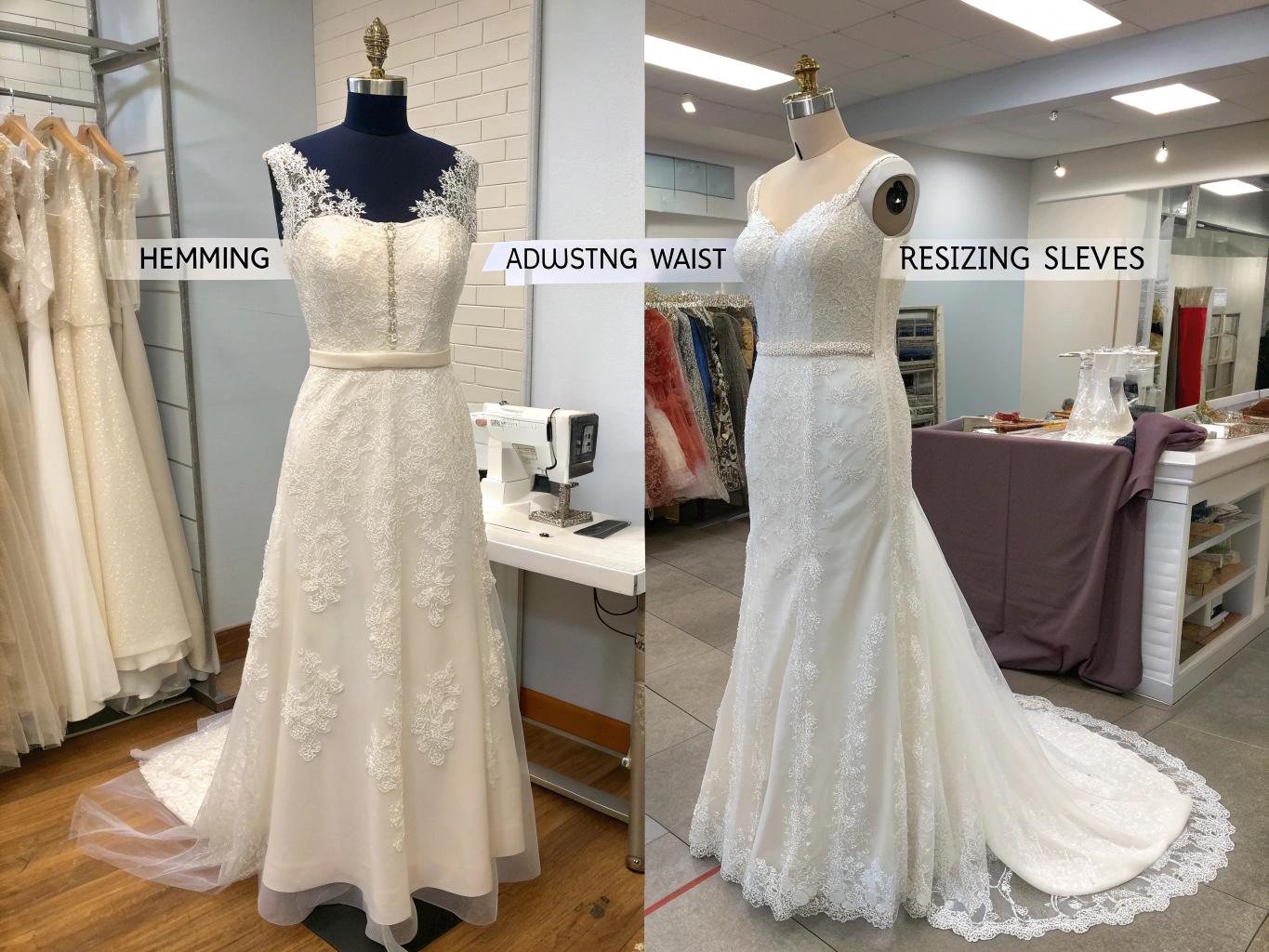
Before diving into costs, let’s talk about what you’ll actually need throughout your alteration journey. Think of this as your bridal preparation wardrobe—items that will make your fittings smoother and your final result flawless.
What to Bring to Your Fittings
The Right Undergarments
Bring the exact bra, shapewear, or bustier you’ll wear on your wedding day. A proper-fitting strapless bra with silicone grip (like the NuBra or similar adhesive styles) creates the foundation your seamstress needs. If you’re considering swapping your traditional bra for a built-in corset, discuss this early—it affects pricing significantly.
Your Wedding Shoes
Even if they’re not your final pair, bring heels at the same height you plan to wear. Hem length depends entirely on this detail. I once had a bride who switched from 3-inch stilettos to flats two weeks before her wedding—her hem had to be completely redone, costing an additional $200.
Accessories That Touch the Dress
Belts, sashes, or brooches that attach to your gown should come to every fitting. The way fabric drapes changes when weight is added.
A Trusted Companion
Bring someone whose opinion you value but who won’t overwhelm the process. One supportive voice helps you make confident decisions without second-guessing every pin placement.
Sensory Considerations
The texture of your gown matters more than you might realize. Silk mikado feels crisp and architectural, while chiffon flows like water. Tulle can feel scratchy against sensitive skin unless lined properly. During alterations, you can request additional lining—usually $50-$100—which transforms comfort entirely.
Styling Time: How Long Do Alterations Actually Take?
Here’s a timeline reality check that most bridal shops won’t tell you upfront.
Standard Alteration Timeline:
- Minimum recommended time: 8-12 weeks before your wedding
- Rush alterations: Available at 30-50% premium cost
- Number of fittings: Typically 2-4 sessions
According to a 2023 survey by The Knot, brides who start alterations at least three months before their wedding report 40% higher satisfaction with their final fit compared to those who wait until the six-week mark.
I’ll be honest—I’ve seen brides attempt two-week turnarounds, and while talented seamstresses can make it happen, the stress isn’t worth it. Your dress deserves unhurried attention, and so do you.
Real-Life Comparison:
My client Sarah started her alterations 14 weeks out. We had four leisurely fittings, time to add unexpected beading she fell in love with, and zero panic. Compare that to another bride who came to me six weeks before her destination wedding—we made it work, but she paid $400 extra in rush fees and couldn’t add the bustle style she originally wanted.
Plan early. Your budget and your nerves will thank you.
Step-by-Step Guide to the Alteration Process
Step 1: The Initial Consultation and Assessment
Your first appointment sets the foundation for everything. A skilled seamstress will have you try on your gown, identify all necessary changes, and provide a detailed estimate.
Stylist Trick: Wear nude, seamless underwear to this appointment. It allows the seamstress to see exactly how the dress sits without visual distractions. Stand naturally—don’t suck in your stomach or adjust your posture artificially. The goal is to fit the dress to your real body.
Step 2: Structural Adjustments (The Big Changes)
This phase addresses significant modifications: taking in or letting out seams, adjusting the bodice, or reshaping the silhouette entirely.
Cost range: $150-$500+
If your dress needs to be taken in more than two sizes, expect higher costs. The entire structure may need reconstruction, which is labor-intensive.
Step 3: Hemming and Length Adjustments
Hemming sounds simple, but wedding dresses aren’t simple garments. Multiple layers, lace borders, and dramatic trains complicate this process significantly.
Cost range: $100-$300 for standard hems; $200-$500 for intricate designs
Step 4: Bustle Creation
Unless you plan to carry your train all evening (exhausting, trust me), you’ll need a bustle. French bustles, American bustles, and ballroom bustles all come with different price tags and aesthetic results.
Cost range: $50-$200
Step 5: Final Fitting and Touch-Ups
Your last appointment ensures everything is perfect. Minor adjustments happen here—tightening a strap, adjusting hook placement, or pressing the final garment.
Stylist Trick: Move around during this fitting. Sit down, raise your arms, hug someone, and do a little dance. Your dress needs to work for all your wedding moments, not just standing still at the altar.
Fashion Fit & Comfort Insights
Let’s talk about something often overlooked: how your altered dress will actually feel during a 10+ hour event.
Fabric Breathability Matters
Research published in the Textile Research Journal indicates that natural fibers like silk and cotton allow 40% better air circulation than polyester blends. If your gown is synthetic, discuss lining options with your seamstress. Adding a cotton or bamboo lining (typically $75-$150) can prevent that sticky, overheated feeling during your reception.
Boning and Structure
If your bodice includes boning, ensure it’s properly positioned during alterations. Improperly placed boning digs into ribs and underarms, creating visible discomfort in photos. I’ve worn test dresses with misaligned boning—after two hours, I was counting the minutes until I could change.
The Comfort Investment
Spending an extra $100-$200 on comfort-focused adjustments pays dividends. A bride who feels physically comfortable radiates confidence and joy. A bride who’s silently suffering through pinching or restriction? That tension shows, especially in candid shots.
The 7 Cost Factors That Determine Your Alteration Bill
Now, let’s break down exactly how much it costs to alter a wedding dress by examining the seven primary factors that influence pricing.
Factor 1: Complexity of the Design
Simple sheath dresses with minimal embellishment cost significantly less to alter than ball gowns with layers of tulle, intricate beading, and cathedral trains.
Simple design alterations: $150-$300
Complex design alterations: $500-$1,500+
Factor 2: Type of Fabric
Delicate fabrics like lace, organza, and silk charmeuse require specialized handling. Each stitch must be placed with precision to avoid permanent damage.
Satin/polyester: Standard pricing
Lace/silk: 20-50% premium
Beaded/embellished: 50-100% premium
Factor 3: Number of Alterations Needed
Each modification adds to your total. Common alterations include:
- Hemming: $100-$250
- Taking in/letting out: $50-$200 per area
- Bustle addition: $50-$200
- Strap adjustments: $30-$75
- Adding cups or boning: $50-$150
Factor 4: Geographic Location
Alteration costs vary dramatically by region. Manhattan seamstresses charge 2-3 times what you’d pay in rural areas.
Major metropolitan areas: $400-$1,000+ average
Suburban/rural areas: $200-$500 average
Factor 5: Seamstress Experience and Reputation
Bridal specialists with decades of experience and excellent reputations command premium rates—and often they’re worth every penny. A master seamstress can transform a problematic fit into something magical.
Factor 6: Timeline and Rush Fees
Need alterations completed in under six weeks? Expect to pay 25-50% more for rush services.
Factor 7: Additional Customizations
Adding sleeves, modifying necklines, or incorporating personal elements (grandmother’s lace, for example) all add costs but create priceless sentimental value.
Sustainable & Affordable Alteration Alternatives
Not every bride has an unlimited alteration budget, and that’s completely okay. Here are money-saving strategies that don’t sacrifice quality:
Choose Simpler Alterations
If budget is tight, prioritize fit in the bodice and bust area—these changes make the biggest visual impact. A slightly long hem with a small train is less noticeable than a gaping bodice.
Consider Local Seamstresses
Bridal shop alterations often include significant markups. Independent seamstresses frequently charge 30-40% less for identical work. Ask for referrals in local wedding Facebook groups.
Buy Pre-Altered Consignment
Sites like StillWhite and Nearly Newlywed sell pre-owned dresses that were altered for someone your size. You might need minimal adjustments rather than major reconstruction.
DIY What You Can
Simple tasks like adding ribbon trim, attaching removable straps, or hand-sewing small embellishments can be done at home, saving $50-$100.
Eco-Friendly Option:
Consider having your dress altered with the intention of reselling or donating it afterward. Some seamstresses can make modifications that are partially reversible, increasing your gown’s second-life potential.
Outfit Pairing Suggestions for Your Wedding Day
Your altered dress is the star, but smart accessories complete the picture:
Spring/Summer Weddings:
Pair your gown with delicate, barely-there sandals and a lightweight veil. Avoid heavy jewelry that competes with your neckline.
Fall/Winter Weddings:
Add a faux fur stole or elegant cape (discuss alteration compatibility with your seamstress). Closed-toe heels create a polished silhouette.
Petite Brides:
Kitten heels or elegant block heels often photograph better than sky-high stilettos and won’t overwhelm your frame.
Tall Brides:
Embrace your height with dramatic cathedral veils and statement earrings that draw the eye upward.
Common Wedding Dress Alteration Mistakes to Avoid
Mistake 1: Waiting Too Long to Start
Six weeks feels comfortable until you need a third fitting and your seamstress is booked solid.
Mistake 2: Losing or Gaining Weight After Final Fitting
Try to maintain your fitting weight for the final weeks. A 5-pound fluctuation can significantly affect bodice fit.
Mistake 3: Not Trying On Your Dress Before Pickup
Always do a final try-on before leaving. Check for loose threads, missed adjustments, or stains.
Mistake 4: Skipping the Movement Test
Sit, walk, raise your arms, and bend. Your dress should move with you comfortably.
Mistake 5: Not Communicating Concerns
If something feels wrong, speak up immediately. A good seamstress wants your feedback.
Clothing Care & Storage Tips
After spending hundreds on alterations, protect your investment:
Before the Wedding:
Store your dress in a breathable garment bag, hanging from reinforced loops (not thin straps). Keep it away from direct sunlight to prevent yellowing.
Transportation:
Lay the dress flat or hang it properly during transport. Never fold the bodice or crush embellishments.
Post-Wedding Preservation:
Professional cleaning and preservation costs $150-$500 but prevents permanent staining. Address any makeup or champagne spots immediately with a professional—don’t attempt home treatments on delicate fabrics.
Pro Tip: Take photos of any pre-existing imperfections before sending your dress for cleaning. This protects you if disputes arise.
Conclusion
Understanding how much it is to alter a wedding dress removes one major unknown from your wedding planning journey. With costs ranging from $150 for simple adjustments to $1,000+ for extensive modifications, your budget depends on design complexity, fabric type, geographic location, and timeline.
The seven cost factors we’ve explored—design complexity, fabric type, number of alterations, location, seamstress expertise, timeline, and customizations—give you the knowledge to ask informed questions and make confident decisions.
Remember, alterations aren’t just about fit. They’re about transformation. The moment you put on your perfectly altered gown and see yourself as a bride for the first time? That’s the investment paying off.
Your next step: Book your alteration consultation early, bring the right essentials, and communicate openly with your seamstress. Your dream dress awaits.
Have questions about your specific alteration needs? Drop them in the comments below, share your alteration experiences with fellow brides, or explore our [Complete Bridal Style Guide] for more wedding fashion wisdom.
Frequently Asked Questions
How much should I budget for wedding dress alterations?
Plan for $200-$600 for standard alterations on moderately complex gowns. If your dress features extensive beading, multiple layers, or requires significant size adjustments, budget $800-$1,200+.
When should I start my wedding dress alterations?
Begin 10-12 weeks before your wedding for comfortable timing. This allows for 2-4 fittings without rush fees.
Can I alter a wedding dress myself?
Minor adjustments like tightening straps are possible for experienced sewers. However, structural changes, hemming with multiple layers, and bodice alterations require professional expertise.
Do bridal shops include alterations in the dress price?
Rarely. Most boutiques charge alterations separately, though some offer packages. Always clarify this before purchasing.
How much does it cost to add sleeves to a wedding dress?
Adding sleeves typically costs $150-$400, depending on fabric, style complexity, and whether lace matching is required.
Can all wedding dresses be altered?
Most dresses can be altered within limits. Taking in is generally easier than letting out, and major size changes (more than 2 sizes) may not be possible without compromising the design.




Add comment